
Insights & Practice
When I Stopped Forcing and Started Listening
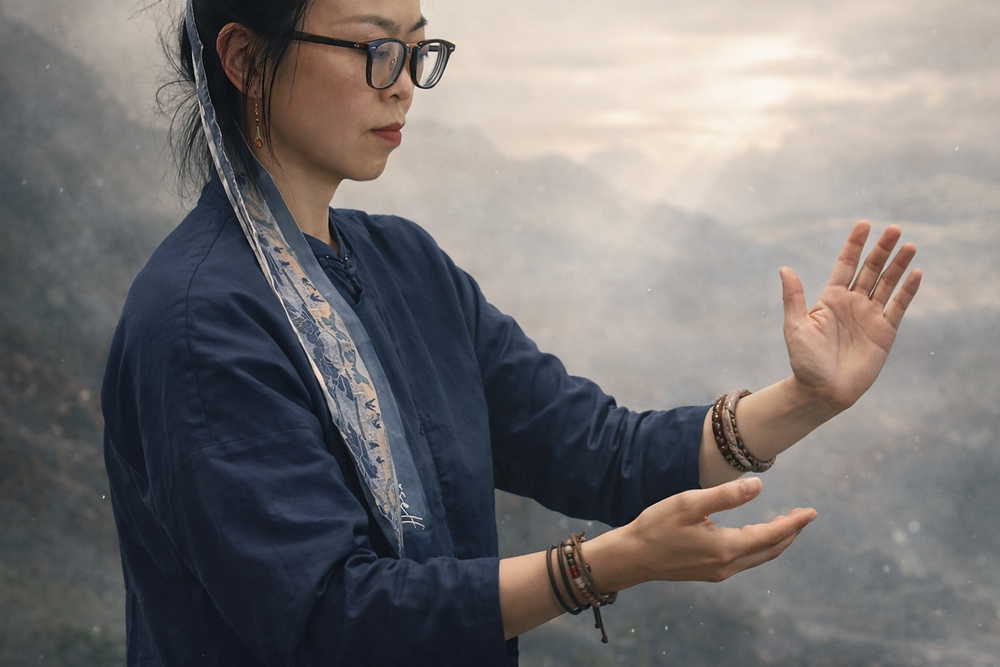
A personal reflection on Tai Chi, pressure, alignment and returning to the body
There was a time in my life when I thought strength meant pushing through.
I knew how to keep going. I could work hard, meet expectations, care for others, continue showing up and hold myself together even when life felt heavy. From the outside, that can look like discipline. It can even look like success.
Inside the body, the story is often more complicated.
The breath becomes shorter without asking permission. The shoulders carry more than their fair share. The jaw holds words that have not been spoken. Sleep may stop restoring us properly. The mind stays busy, not because it is inspired, but because it has forgotten how to settle.
For a long time, I thought this was simply what life required. Like many people, I had learned to measure progress through effort. If something felt difficult, I pushed harder. If I felt tired, I kept moving. If life felt uncertain, I tried to control more.
It took me a long time to understand that not all effort is alignment.
Some effort helps us grow. Some effort quietly removes us from ourselves.
In a world obsessed with hustle and control, Tai Chi gave me a very different kind of wisdom. It reminded me that real success does not always come from pushing harder. Often, it begins when we return to alignment.
The body eventually tells the truth
I did not come to Tai Chi as someone who had always lived in balance. I came to it through my own need to understand the body more honestly.
There were periods in my life when I was outwardly functioning, but inwardly stretched. My body would continue moving through the day, yet I could feel a deeper disconnection. I was doing what needed to be done, but not always living from a steady centre.
This is something I now recognise in many people who come to Apex Tai Chi.
They are not necessarily looking for exercise in the usual sense. Many are already doing enough, sometimes far too much. They are looking for a way to feel better inside themselves. They want to breathe more easily, move with less tension, feel steadier, sleep more deeply, think more clearly, and stop carrying the whole of life in their shoulders.
The body has a way of telling us when effort has become too expensive. It may speak through fatigue, stiffness, shallow breathing, aches, irritability, anxiety, heaviness or the strange feeling of being present in life but not fully present in ourselves.
We can ignore those signals for a while. Many of us become very skilled at that, because apparently the modern adult has been trained to treat exhaustion as proof of character.
Eventually, though, the body asks for a different conversation.
Tai Chi changed my understanding of strength
Tai Chi did not teach me to give up effort. It taught me to refine it.
That was a significant shift.
In Tai Chi, if I tried too hard, the movement became stiff. If I rushed, my balance became less clear. If I forced the arms, the shoulders tightened. If I held the breath, the whole body lost its ease. The practice gave me immediate feedback. It showed me, without drama, where I was interfering with myself.
This became one of my deepest lessons.
Real strength is not always more effort. Sometimes it is better organisation. Sometimes it is the ability to soften the part of the body that is working too hard. Sometimes it is knowing when to pause long enough for the next step to become clear.
When we are rooted, present and able to trust the unfolding moment, effort becomes more intelligent. We do not collapse into passivity, but we also stop forcing our way through life as if pressure were the only proof of commitment.
Through practice, I began to understand alignment as something physical, emotional and mental at the same time. When the feet are grounded, the breath has more room. When the shoulders soften, the mind often becomes less crowded. When movement comes from the centre, the body no longer feels so fragmented.
This is why I do not teach Tai Chi as vague relaxation.
I teach it as a practical way of coming back into relationship with the body.
Success without abandoning yourself
Many of my clients are in a stage of life where the pressure is not small.
They may be working, caring, recovering, ageing, rebuilding confidence, managing stress, carrying family responsibilities, or quietly wondering why the old ways of coping no longer feel enough. They may look capable from the outside while feeling tense, scattered or depleted within.
I understand that.
There is a particular kind of exhaustion that comes from always being the one who manages, adjusts, supports, continues and appears fine. It can become so normal that we forget to ask what it is costing the body.
Tai Chi asks a different question:
Can I move towards what matters without abandoning myself?
This question has shaped my own practice and the way I now teach. It is possible to be committed without becoming harsh. It is possible to be strong without living in permanent tension. Growth does not require the body to be dragged behind the mind while the mind chases achievement like a frightened executive with a motivational notebook.
Real success, to me, must include the body.
If the breath is always restricted, if the nervous system is constantly alert, if the body is braced every day, then something important is asking for attention. Outer achievement cannot fully nourish us if inner steadiness has been lost.
Learning to trust rather than control
Control can feel safe. I know this well.
When life is uncertain, control can seem like the only way to stay upright. We try to manage every outcome, prepare for every possibility and hold ourselves tightly enough to avoid falling apart.
But the body does not thrive under constant control.
In Tai Chi, the more I tried to control every detail, the less natural the movement became. Trust had to enter the practice. Not blind trust, but embodied trust: the kind that grows when the feet feel the ground, the breath is allowed to move, and the body begins to understand that it does not need to grip everything to remain safe.
This has become one of the quiet truths of my work.
Trust is not passive. It is a skill.
It is the ability to release unnecessary effort while remaining present. It is the courage to soften without collapsing. It is the intelligence to feel what is happening before rushing to fix it.
For people living with stress, anxiety, fatigue or emotional overload, this matters deeply. The body may have spent years organising itself around protection. Tai Chi does not criticise that protection. It simply offers another possibility.
The practice became a way home
Over time, Tai Chi became more than movement for me.
It became a way of recognising when I was leaving myself. When I was rushing. When I was holding my breath. When my shoulders were trying to carry decisions that belonged to the whole body. When I was pushing from pressure rather than moving from alignment.
The practice did not remove difficulty from life. That would be a suspicious promise, and life has never been that cooperative. What it gave me was a way to return.
Return to the ground. Return to breath. Return to the centre. Return to a quieter form of strength.
This is what I want my clients to experience.
Not performance. Not perfection. Not another demand to improve themselves.
Apex Tai Chi is about creating a space where the body can begin to feel listened to again. A space where movement is gentle but meaningful. A space where people can rebuild steadiness, confidence, mobility, calm and a more respectful relationship with themselves.
A different kind of progress
The world often tells us to push harder.
Tai Chi has taught me to ask whether the pushing is actually helping.
There are moments when effort is needed, of course. But there are also moments when the more powerful act is to soften, listen, realign and move from a clearer centre.
This is not weakness. It is not avoidance. It is a more intelligent form of progress.
For someone who feels tense, tired, disconnected or emotionally overloaded, the first step may be simple. Standing still long enough to feel the feet. Noticing the breath without trying to fix it. Allowing the shoulders to release a little of what they have been carrying.
These small shifts matter because they change the way we inhabit ourselves.
When the body feels supported, the mind often becomes less scattered. When the breath has space, emotion may become easier to hold. When movement becomes more grounded, daily life can begin to feel less overwhelming.
That is the quiet work of Tai Chi.
Why I teach this work
I teach Apex Tai Chi because I believe many people are not lacking discipline. They are lacking a safe and intelligent way to return to themselves.
They do not need to be pushed harder. They need to feel supported enough to soften. They need to rebuild trust in the body, not through force, but through repeated experiences of steadiness.
This is especially true for people between 35 and 65 who are carrying pressure, responsibility, fatigue, stress or the feeling that they have become disconnected from their own body. Tai Chi offers a practical path back.
It is gentle, but not shallow. It is slow, but not passive. It is calm, but not empty.
At its deepest, Tai Chi teaches us how to stop fighting ourselves and begin moving in a more aligned way.
That has changed my life.
It is also the work I now offer to others.
A gentle place to begin
If this reflection speaks to your own experience of pressure, stress, overwork, emotional fatigue or feeling disconnected from your body, Tai Chi may offer a meaningful place to begin.
At Apex Tai Chi, I teach authentic Tai Chi, Qigong, meditation, breathwork and embodied practice as practical ways to support balance, clarity, emotional regulation and inner steadiness.
You can explore classes, programmes, blog articles and practice guidance here:
/
For questions or enquiries, no matter how big or small:
Apex Tai ChiAuthentic Tai Chi, Qigong & Daoist Movement for modern wellbeing.
Be well & remain curious,
Dr Jar.
Responses
Share a reflection with Dr Jar.
Your message is reviewed before anything is published, helping keep this a thoughtful and respectful space.